HaulPath
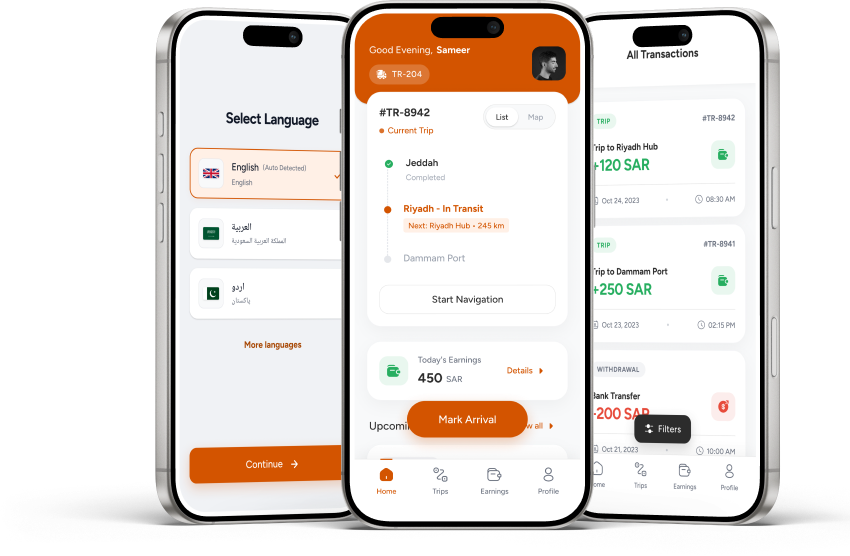
A mobile app for truck drivers at HaulPath Logistics - complete assigned trips, capture proof of delivery, track task progress, and see earnings, in a simple interface built for multilingual, low-literacy users.
- Role
- Product Designer - research, UX flows, wireframes, and final UI design.
- Timeline
- 2 Weeks - Research → Wireframes → High-Fidelity UI → Prototype
- Team
- Solo designer, with the operations team as stakeholders
- Platform
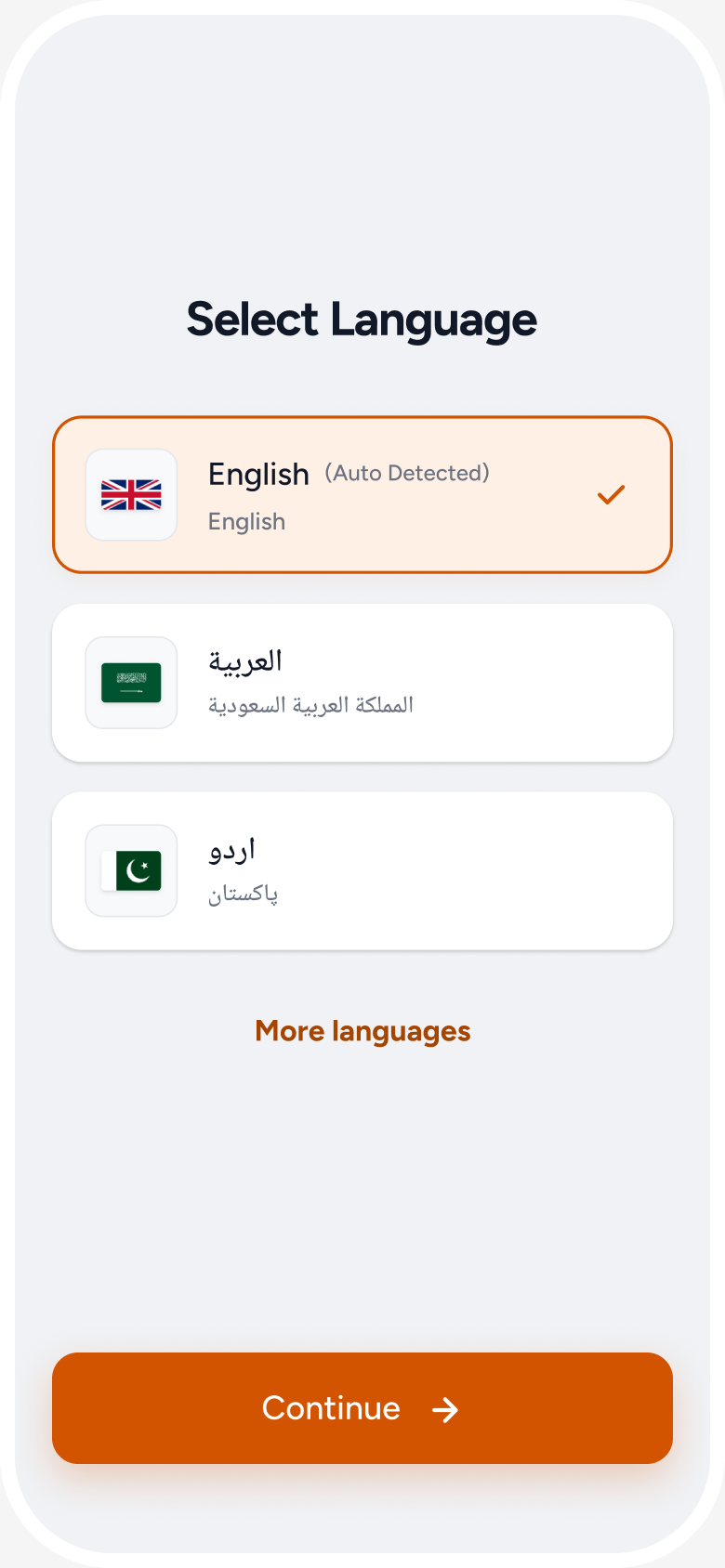
- Driver mobile app - multilingual (Arabic, English, Urdu), RTL.
- Tools
- Figma, Gemini 3.1 Pro, ChatGPT, Google Sheets
My contributionOwned research, UX flows, wireframes and the final high-fidelity UI for a driver app built for multilingual, low-literacy users.
Project Purpose
HaulPath is a mobile app designed for truck drivers working for HaulPath Logistics. The app helps drivers complete their assigned trips, capture proof of delivery, track task progress, and see their earnings, all in a simple, easy-to-use interface for multilingual, low-literacy users.
Problem Context
Users & Stakeholders
Primary users - truck drivers
Stakeholders
Current Workflow
How tasks are currently handled
- Drivers receive assignments via phone or message
- Arrival confirmation is manual via calls
- Payments are tracked separately by the operations team
- No in-app visibility for tasks or earnings
Pain points
- Drivers rely heavily on phone communication
- Payment and trip transparency is limited
- Trip progress and completion aren't visible
Design Goals
- Reduce driver dependency on dispatch
- Make earnings and tasks transparent
- Simplify task completion, even for low-literacy users
- Support multiple languages
Product Strategy
Core modules
Design principles
- Simplicity over complexity
- High contrast and large tap targets
- Visual instructions + minimal text for multilingual support
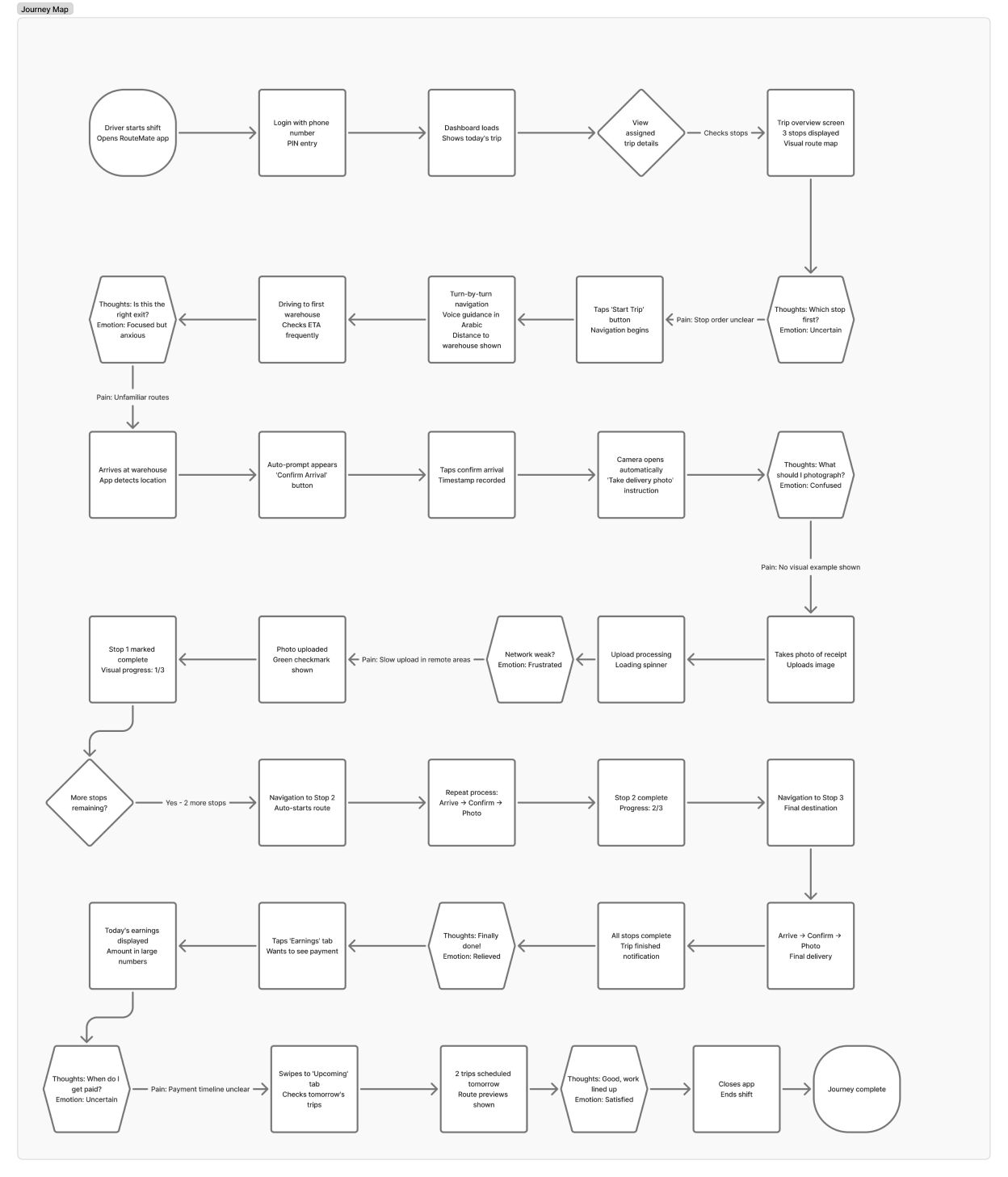
User Journey Map
Visualizing the captain's day from logging in at the warehouse to completing their final delivery.
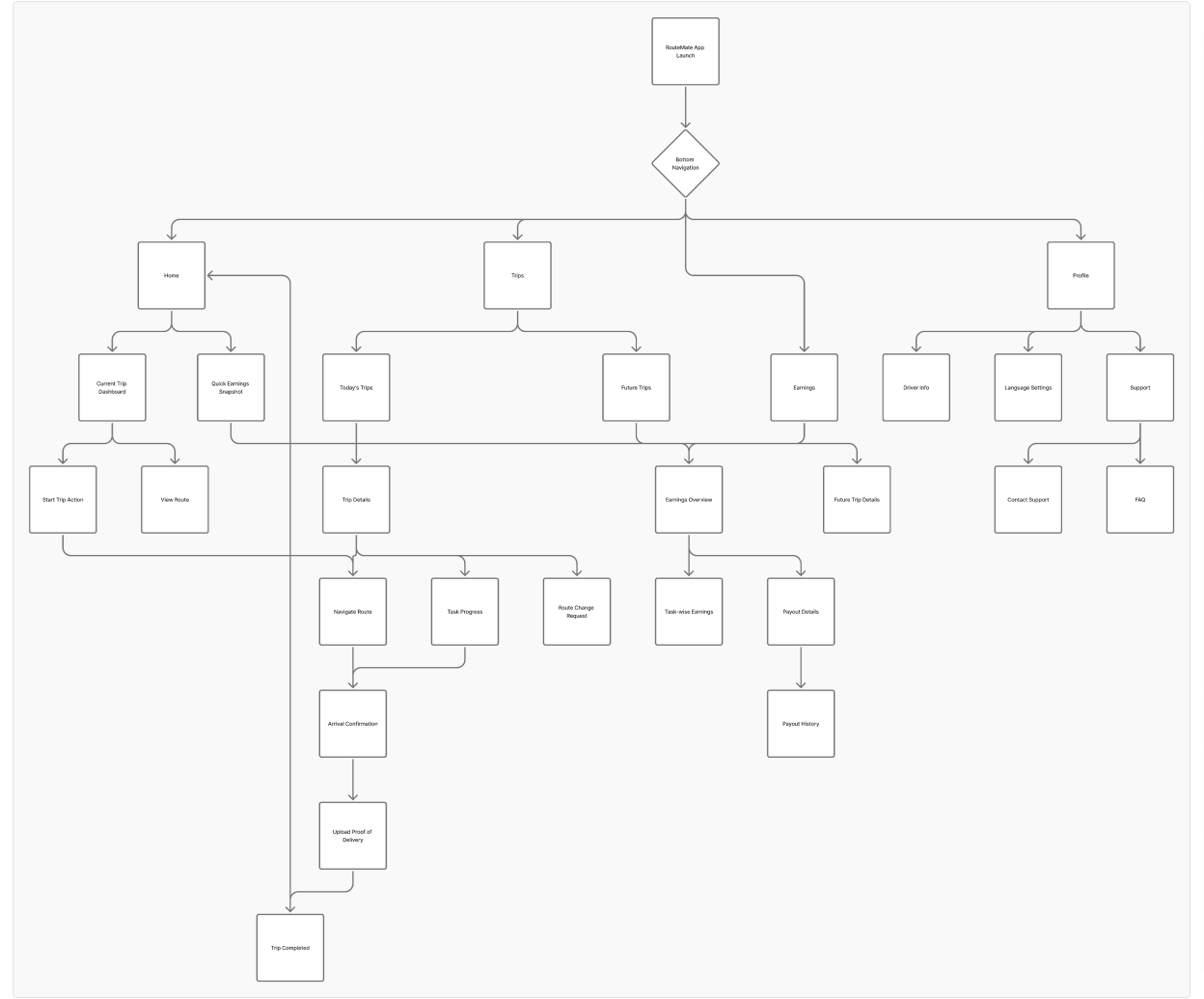
Information Architecture
Restructuring the app to ensure essential features are accessible within a single tap.
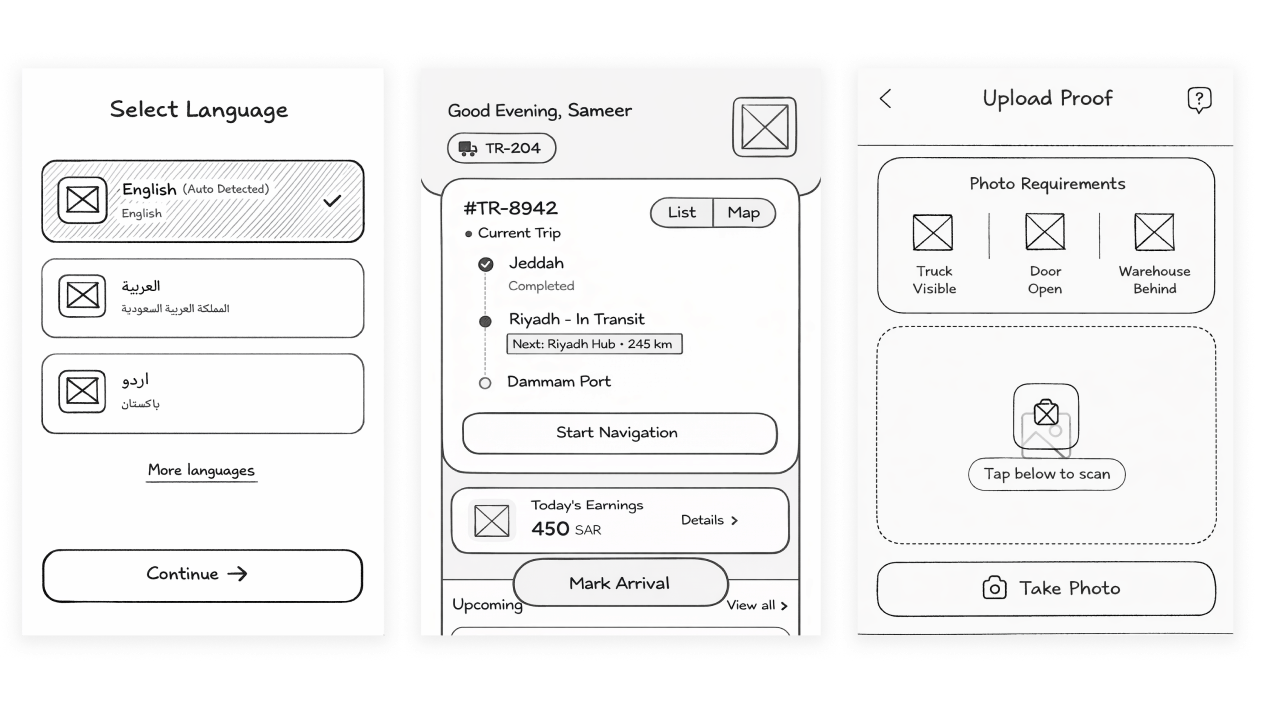
Wireframes
Early explorations focusing on layout, hierarchy, and minimizing the steps required for core delivery actions.
Design System
Typography: Figtree & Noto Naskh Arabic.
Feature Highlights
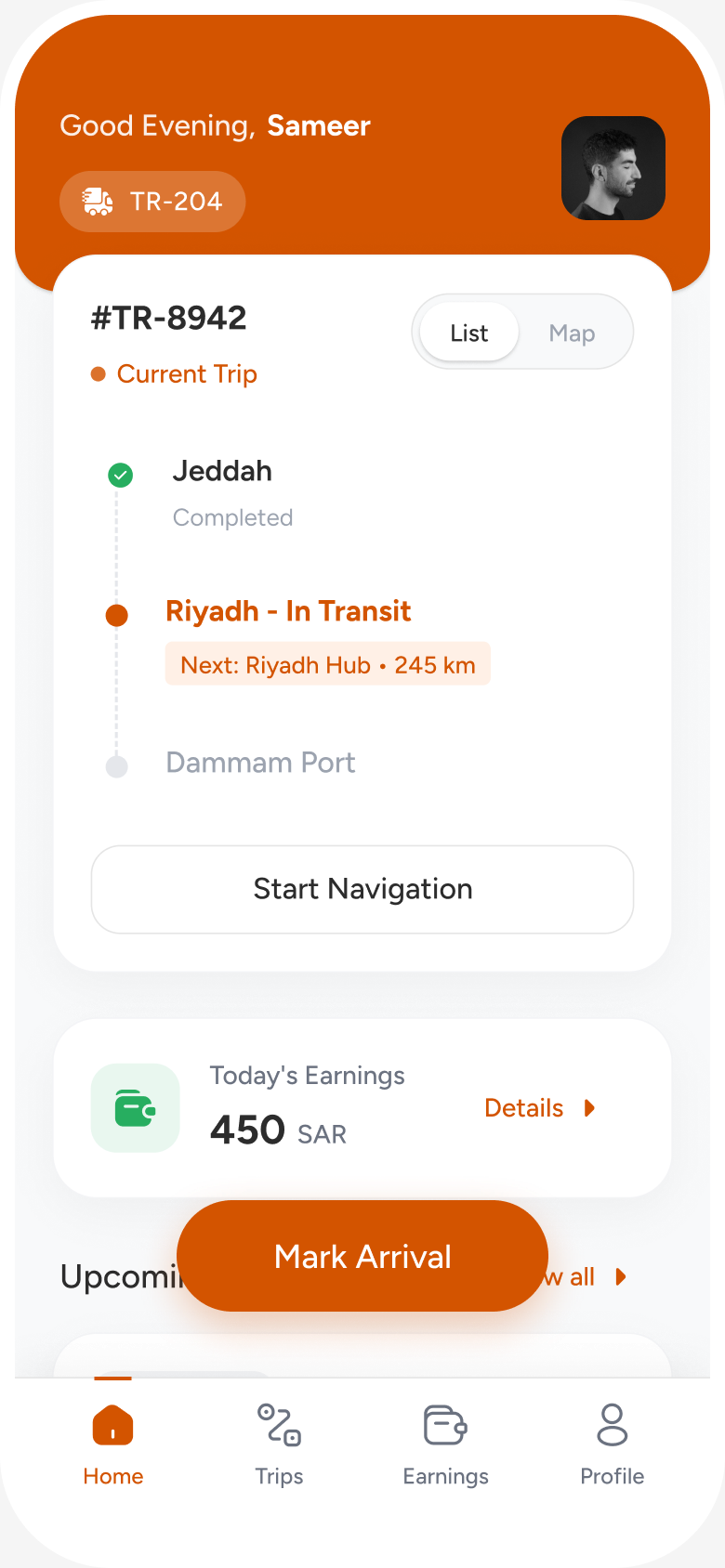
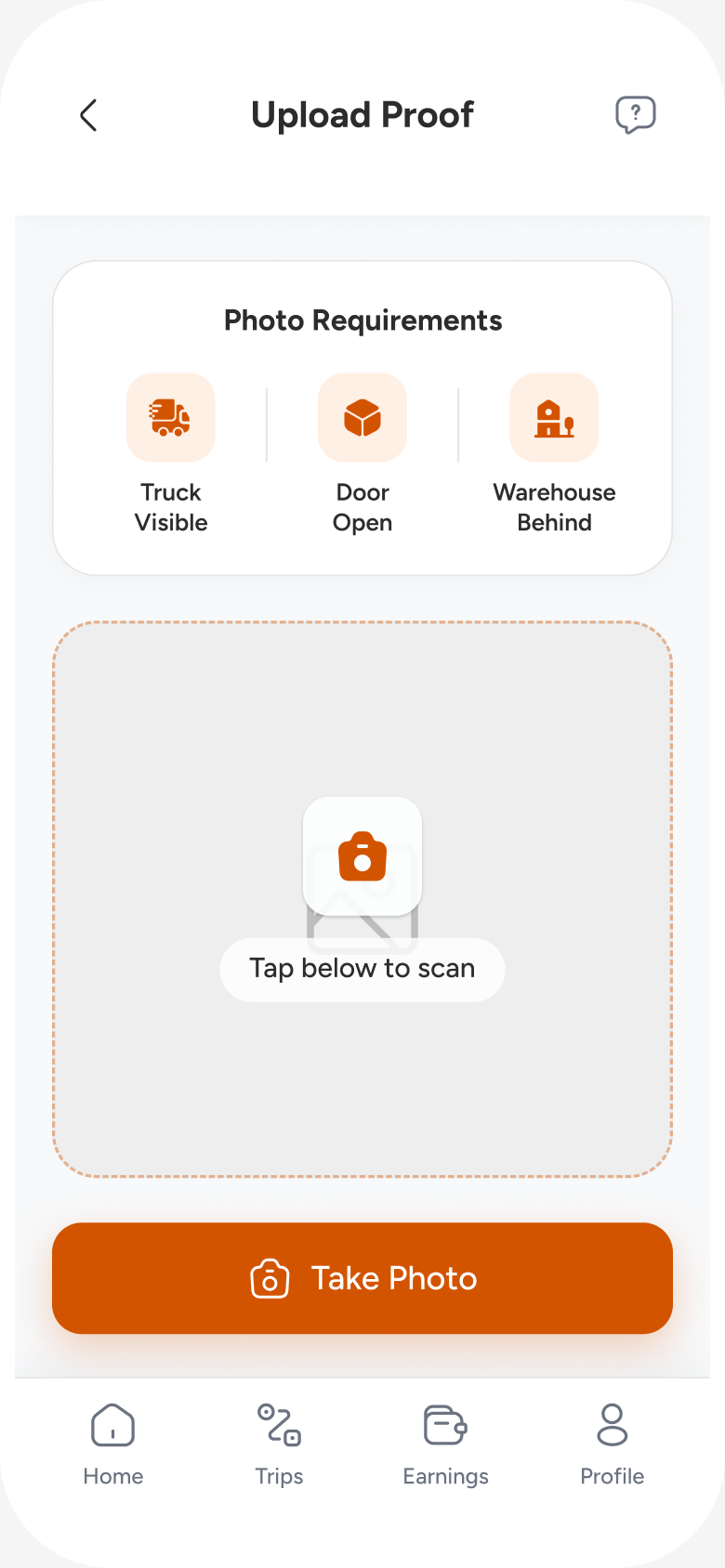
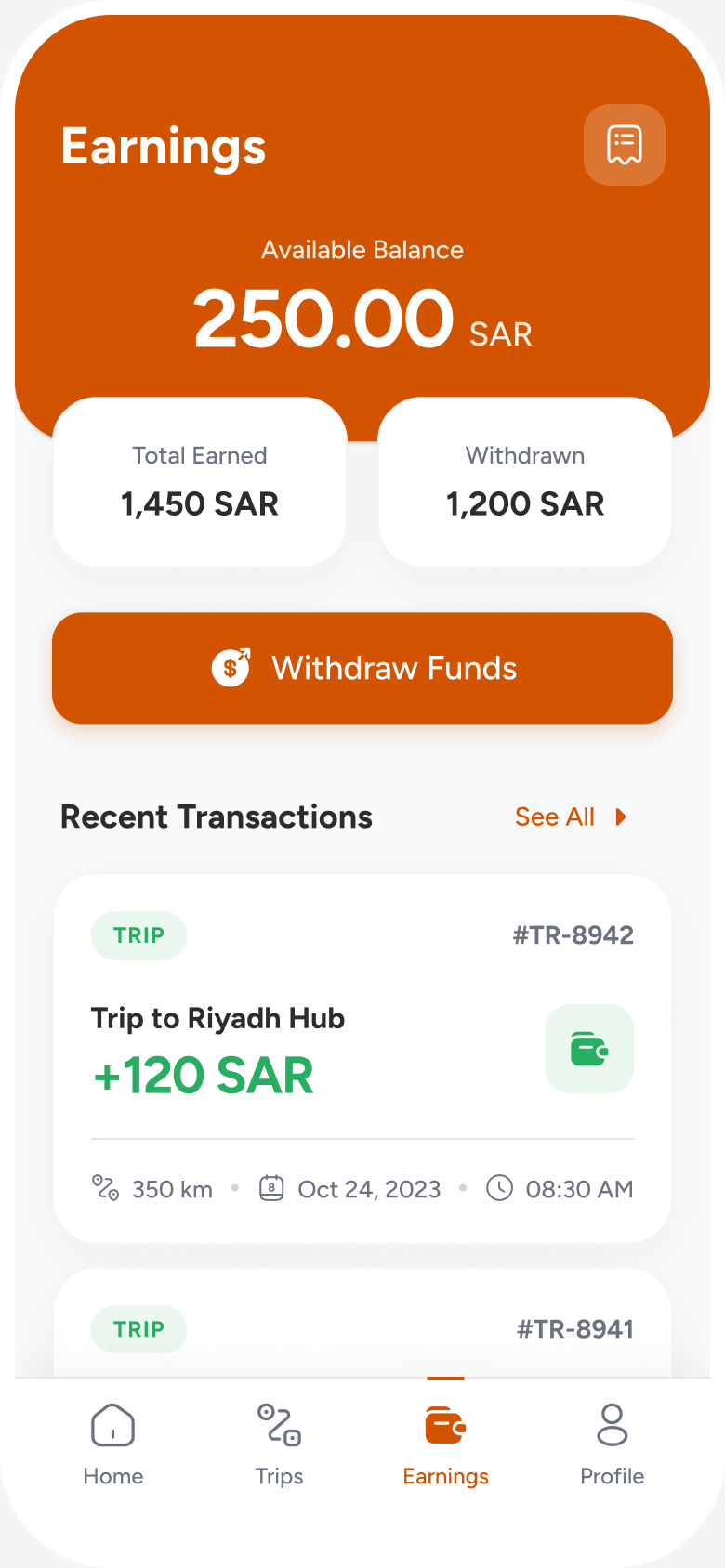
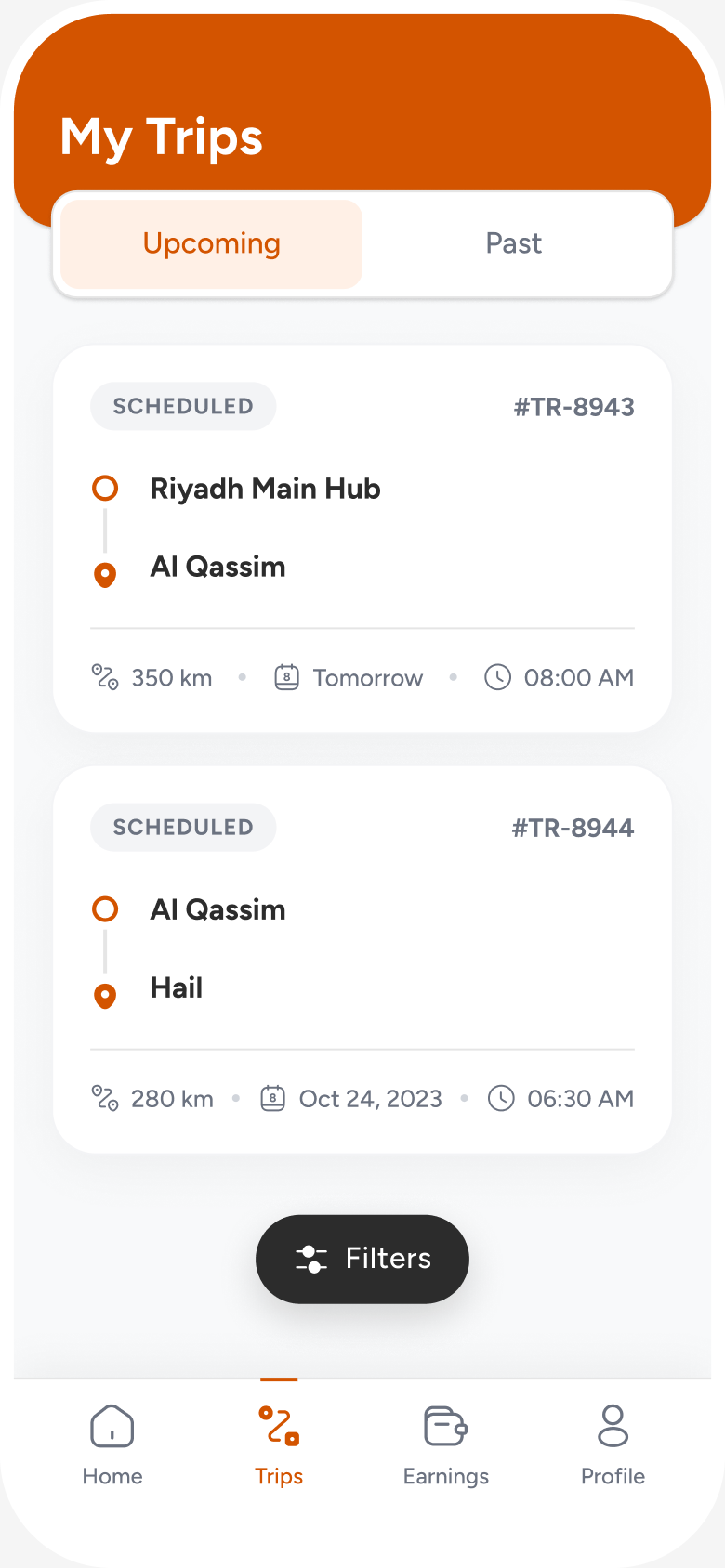
High-fidelity UI, shown in English and Arabic (RTL).
Edge Cases & Considerations
Outcomes & Impact
(Expected / Hypothetical)
- Reduced calls to dispatch by providing task instructions in-app
- Improved transparency in earnings
- Clear, step-by-step journey for drivers, reducing errors
- Multilingual support improves usability across the fleet
Key Learnings
- Multilingual accessibility is crucial for low-literacy users
- Visual instructions outperform text-heavy instructions
- Simple, high-contrast color palettes improve readability in mobile logistics apps
- Step-by-step task flow reduces operational dependency
Business Goals
HaulPath Logistics operates a large fleet of drivers across Saudi Arabia. The company relies heavily on manual coordination between drivers and the operations team. The goal of this project was to digitize key parts of the driver workflow to improve operational efficiency and transparency.
1. Reduce operational dependency on dispatch
ProblemDrivers frequently contact the operations team for trip instructions and arrival confirmation.
GoalReduce driver-dispatch communication by providing trip instructions and task tracking directly within the app.
Expected impactLower operational workload and faster coordination between drivers and warehouses.
2. Improve delivery verification and accountability
ProblemArrival confirmation currently happens through calls or messages, which can lead to inconsistencies.
GoalIntroduce a proof-of-delivery system where drivers upload a photo showing the truck and warehouse during arrival.
Expected impactMore reliable delivery verification and better operational records.
3. Increase driver productivity
ProblemDrivers often lack visibility into their tasks and next destinations, which slows down the workflow.
GoalProvide a clear step-by-step trip flow so drivers always know their current task and next destination.
Expected impactFaster trip completion and fewer operational errors.
4. Improve payment transparency for drivers
ProblemDrivers currently rely on manual updates to know how much they have earned.
GoalProvide real-time visibility into completed tasks, commissions earned, and upcoming payouts.
Expected impactReduce payment-related inquiries and improve driver trust.
5. Support a diverse driver workforce
ProblemHaulPath drivers come from multiple countries and may have limited technical literacy.
GoalDesign a multilingual interface that prioritizes simple interactions and visual instructions.
Expected impactFaster onboarding and fewer usability issues across different driver groups.
Expected business outcomes
- Reduce dispatch-related calls from drivers
- Improve delivery verification through photo proof capture
- Increase driver efficiency through clearer task guidance
- Reduce payment-related inquiries from drivers
- Enable better operational visibility through digital trip tracking
Success Metrics (KPIs)
To measure the impact of the HaulPath app, the following key performance indicators were defined. These metrics focus on operational efficiency, driver productivity, and transparency.
1. Dispatch Communication Reduction
ProblemDrivers frequently call the operations team for trip instructions and arrival confirmation.
MetricNumber of driver calls to dispatch per trip.
Success targetReduce driver-dispatch calls by 30-40% after implementing in-app task visibility and arrival confirmation.
Why it mattersReducing operational interruptions allows dispatch teams to manage more drivers efficiently.
2. Delivery Verification Rate
ProblemArrival confirmation currently relies on manual communication, which lacks consistent proof.
MetricPercentage of completed deliveries with photo proof uploaded.
Success targetAchieve 90-100% proof-of-delivery capture through mandatory photo uploads.
Why it mattersImproves accountability and reduces disputes regarding delivery completion.
3. Task Completion Efficiency
ProblemDrivers sometimes lack clarity about their next destination or task sequence.
MetricAverage time taken to complete a multi-stop trip.
Success targetImprove trip completion efficiency by 10-15% through clearer navigation and task guidance.
Why it mattersEven small efficiency gains can significantly impact large-scale logistics operations.
4. Payment Transparency
ProblemDrivers often contact operations to confirm their earnings or payout schedule.
MetricNumber of payment-related inquiries from drivers.
Success targetReduce payment inquiries by 25-30% by providing clear earnings and payout visibility in the app.
Why it mattersImproves driver trust and reduces operational workload.
5. Driver Adoption Rate
ProblemDrivers may have limited experience with digital tools.
MetricPercentage of drivers actively using the app for trip tracking and arrival confirmation.
Success targetAchieve 80-90% adoption within the first few months of rollout.
Why it mattersHigh adoption ensures operational processes can fully transition from manual coordination to digital workflows.